GL.iNet Mudi 7 (GL-E5800) review
Who is this for? Travellers and remote workers who want a private network on the road that is independent of hotel Wi-Fi or public hotspots — powered by 5G and a 13.5-hour battery instead of a wall outlet.
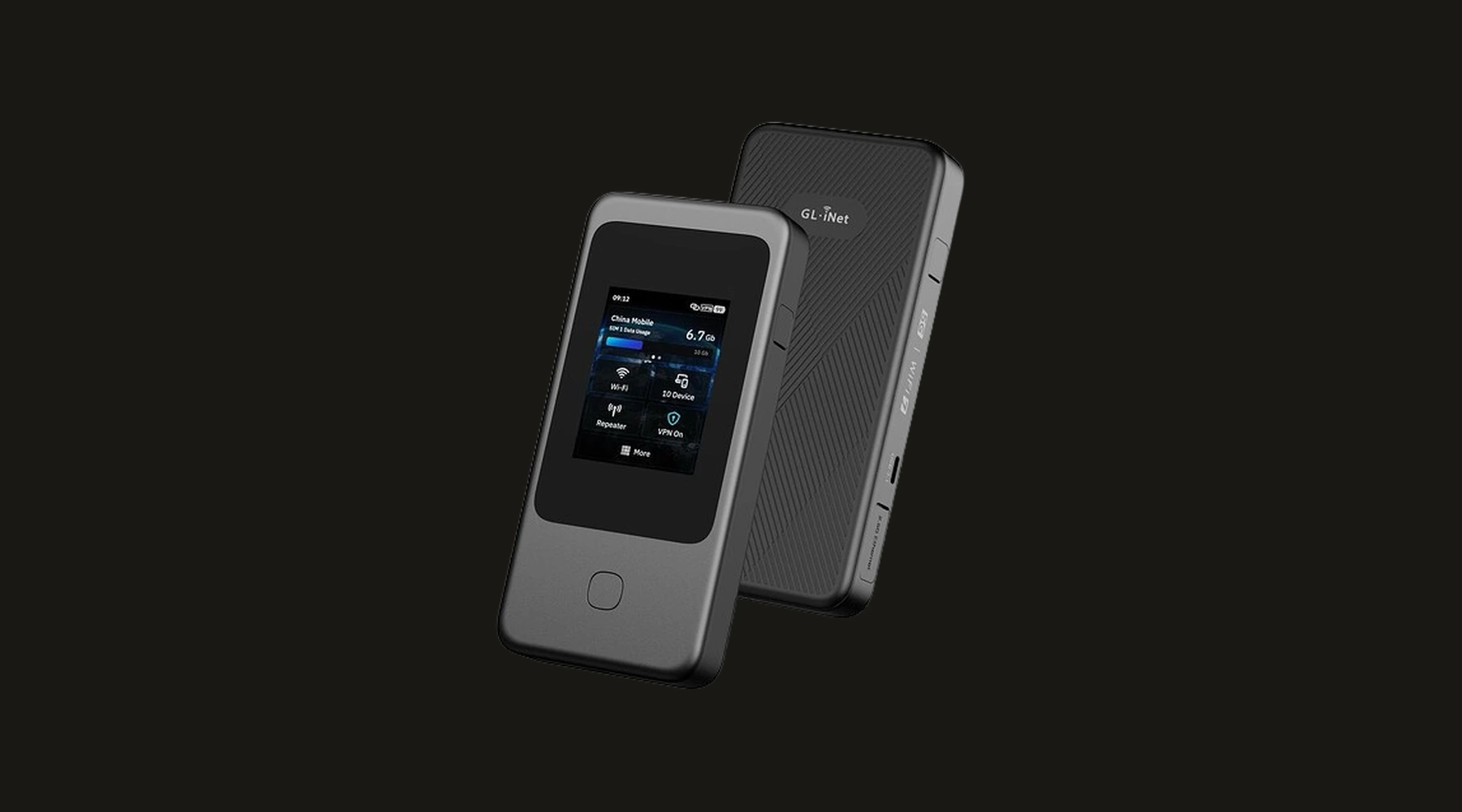
GL.iNet Mudi 7 (GL-E5800) review
Who is this for? Travellers and remote workers who want a private network on the road that is independent of hotel Wi-Fi or public hotspots — powered by 5G and a 13.5-hour battery instead of a wall outlet.
The Mudi 7 is fundamentally different from the rest of GL.iNet’s lineup. Where the Slate 7 Pro and Beryl 7 need a power outlet and connect via WAN or repeater, the Mudi 7 creates its own 5G connection via SIM or eSIM. It has a built-in battery, a touchscreen, and Wi-Fi 7 tri-band. This is the GL.iNet option for those who don’t want to depend on the existing network infrastructure at a location.
The EU version costs around €425; the US variant is priced similarly at around $420 (check current price) and is regionally restricted: each variant supports the 5G bands licensed in its own region, so using one outside its intended region may give limited 5G coverage.
Specifications
| Spec | Value |
|---|---|
| CPU | Qualcomm quad-core @2.2 GHz |
| RAM | 2 GB LPDDR4X |
| Storage | 8 GB eMMC |
| Wi-Fi | Wi-Fi 7 tri-band (BE10000): 688 Mbps (2.4 GHz) + 2,882 Mbps (5 GHz) + 5,764 Mbps (6 GHz) — combined ~9,334 Mbps |
| 5G | Sub-6 GHz, NSA/SA, up to 4.67 Gbps downlink |
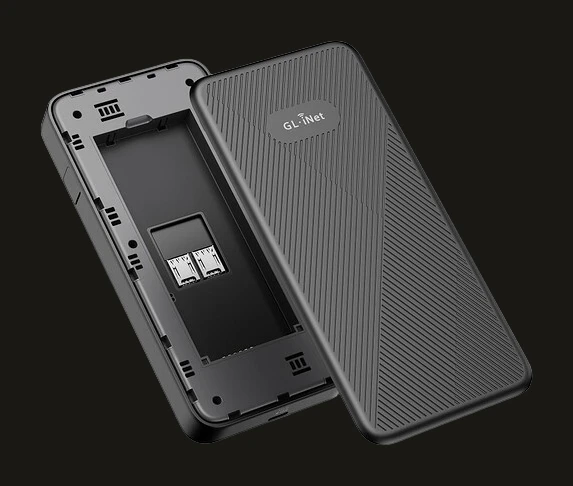
| SIM | 2× nano-SIM + onboard eSIM (dual standby) |
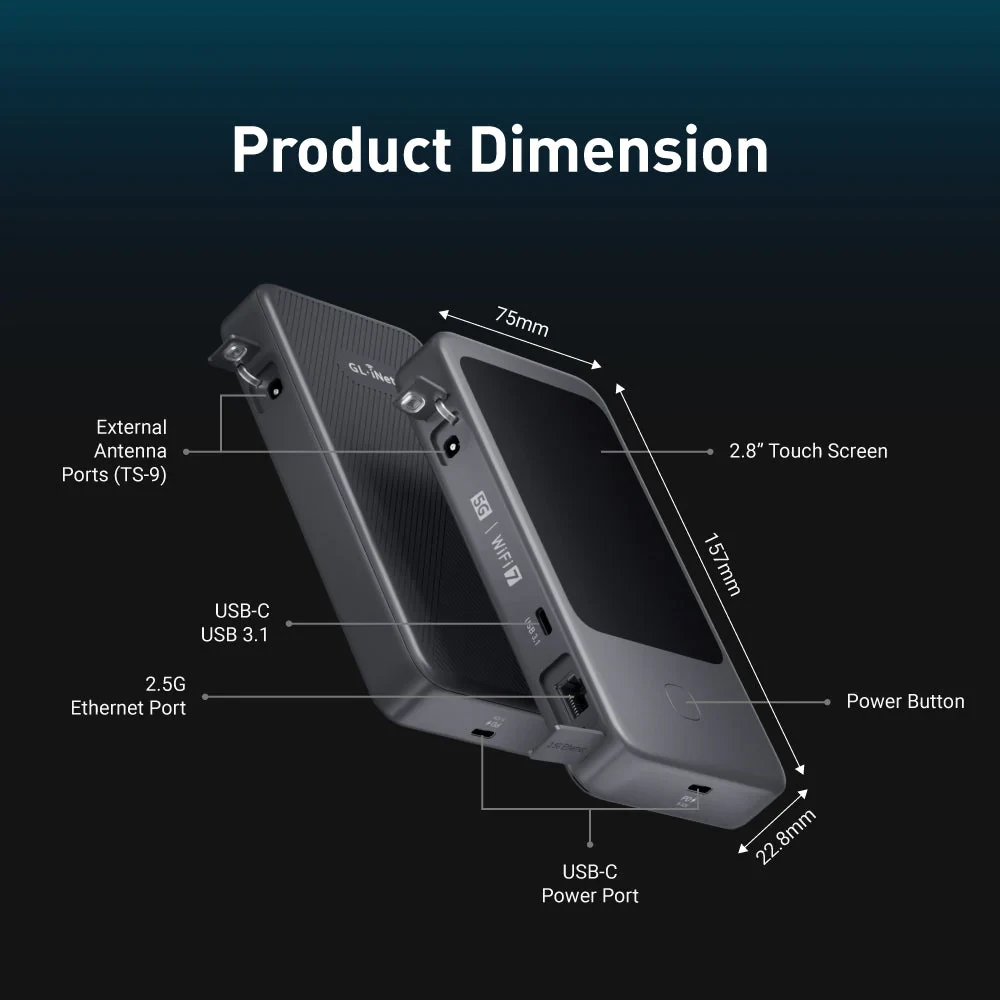
| Ethernet | 1× 2.5G |
| USB | 1× USB-C (data, 10 Gbps) + 1× USB-C (power) |
| Touchscreen | Yes — 2.8” LCD |
| Battery | 5,380 mAh, 13.5h runtime, 24W PD fast charging |
| OS | OpenWrt |
| Dimensions | 157 × 75 × 22.8 mm, 300 g |
| Price | around €425 / $420 (check current price) |
WireGuard performance
GL.iNet specifies WireGuard throughput of 600+ Mbps. That is lower than the Slate 7 Pro and Beryl 7 (both ~1,100 Mbps), but in practice 5G coverage and speed are the limiting factor before VPN throughput is. On a typical 5G connection of 100–400 Mbps, 600+ Mbps is more than sufficient.
All throughput figures are manufacturer specifications. Real-world benchmarks will be added when we have hands-on time with the device.
Mudi 7 vs alternatives
| Beryl 7 | Slate 7 Pro (BE10000) | Mudi 7 (GL-E5800) | |
|---|---|---|---|
| Connection type | WAN / Wi-Fi repeater | WAN / Wi-Fi repeater | 5G NR + WAN |
| Wi-Fi | Wi-Fi 7 dual-band | Wi-Fi 7 tri-band | Wi-Fi 7 tri-band |
| Battery | No | No | Yes (13.5 hours) |
| SIM / eSIM | No | No | 2× nano-SIM + eSIM |
| WireGuard | ~1,100 Mbps | ~1,100 Mbps | 600+ Mbps |
| RAM | 512 MB | 1 GB | 2 GB |
| Ethernet | 1× 2.5G | 2× 2.5G | 1× 2.5G |
| Price | around €120 / $140 | around €246 / $240* | around €425 / $420 |
| OpenWrt mainline support | Yes — merged into upstream OpenWrt (mediatek/filogic target) | Unclear — GL.iNet’s own forum describes it as still on a patched OpenWrt 21.x branch, not confirmed mainline | No committed timeline — depends on Qualcomm releasing open drivers for the 5G/Wi-Fi 7 platform |
| Independent security research | None found in this pass | None found in this pass | SRLabs’ blue-merle covers the older 4G Mudi (GL-E750); not yet extended to the Mudi 7 |
The choice is situation-dependent: the Beryl 7 is the cheapest option for those who only need to replace hotel Wi-Fi. The Slate 7 Pro adds a touchscreen and an extra Ethernet port. The Mudi 7 is the choice when you want to be completely independent of the local network infrastructure.
*The Slate 7 Pro is not currently sold in the US — GL.iNet has confirmed its US launch is on hold pending FCC certification. The Mudi 7 itself is unaffected and sold normally in the US.
On the last two rows: “none found” reflects the depth of this research pass, not proof that no such work exists — and blue-merle is a cellular/IMEI-focused tool, so it’s a natural fit for the Mudi line specifically and wasn’t expected to extend to the non-cellular Beryl 7 or Slate 7 Pro anyway.
Dual SIM and eSIM
The Mudi 7 supports two nano-SIM cards and an onboard eSIM simultaneously (dual standby). This makes it possible to:
- Combine a local data SIM with a fixed home subscription SIM
- Activate eSIM profiles for temporary use in another country
- Automatically switch when one connection fails
The EU version of the Mudi 7 is optimised for frequency bands licensed in Europe. Use in other regions may result in lower 5G speeds or fallback to 4G LTE.
OpenWrt and web interface
The Mudi 7 runs the same GL.iNet firmware as the rest of the range:
- WireGuard and OpenVPN client (30+ built-in VPN providers)
- DNS-over-TLS and DNS-over-HTTPS
- AdGuard Home as a built-in DNS ad-blocker
- 5G/4G roaming and band management via web interface
- USB tethering as an alternative WAN source
- Per-device VPN policy and kill switch
Note: this is GL.iNet’s own OpenWrt-based firmware, not “vanilla” OpenWrt. Official upstream OpenWrt support doesn’t yet exist for the Mudi 7 — that depends on whether Qualcomm ever releases open drivers for the 5G/WiFi 7 chipset, with no committed date.
Caveats
5G coverage is regional: The EU version supports common European 5G Sub-6 GHz bands. Outside Europe, coverage may be limited.
Price: At around €425 / $420, the Mudi 7 is the most expensive option in GL.iNet’s travel router lineup. For those who only need a hotel router, the Beryl 7 or Slate 7 Pro is a better investment.
WireGuard 600+ Mbps: Lower than the Slate 7 Pro and Beryl 7. Rarely a bottleneck on 5G connections in practice.
Regional restriction: Buy the EU variant for use in Europe. The US variant has different band support.
No dual-WAN failover: There is only one 2.5G Ethernet port; failover works between 5G and the LAN port, not between two wired WAN connections.
Independent security scrutiny exists for the Mudi line, but not specifically for the Mudi 7 yet: SRLabs, a respected German security research firm, builds and maintains blue-merle — a real anonymity-hardening package (IMEI/MAC/BSSID randomization, forensic log wiping) for GL.iNet’s older 4G Mudi (GL-E750). For the Mudi 7 itself, only a couple of months on the market, that depth of attention doesn’t exist yet — there’s an open GitHub issue asking for exactly that extension.
Pros and cons
Pros
- Fully self-contained network: no hotel Wi-Fi or wall outlet required
- 13.5-hour battery — a full working day
- Dual SIM + eSIM — flexible connectivity options on the road
- Wi-Fi 7 tri-band including 6 GHz
- 2 GB RAM — more than any other GL.iNet travel router
- 5G NR SA/NSA: future-proof connectivity
- Travel case included
Cons
- Most expensive option in GL.iNet’s travel router lineup
- WireGuard throughput lower than Slate 7 Pro and Beryl 7
- EU variant has limited usability outside Europe
- Only one Ethernet port
- Charging via USB-C PD requires the included charger or a compatible 24W PD adapter
Getting started
- Insert a nano-SIM or activate an eSIM profile
- Charge the battery via USB-C PD (included charger recommended for 24W)
- Turn on the Mudi 7 — it starts automatically and connects via 5G
- Connect your devices to the Mudi 7’s Wi-Fi network
- Open the web interface at
192.168.8.1 - Set up WireGuard via VPN → WireGuard Client → add your VPN provider
- Enable the kill switch
- Optional: enable DNS-over-TLS or AdGuard Home for network-wide DNS filtering
The touchscreen shows battery status, connection speed, and VPN status after setup.
Conclusion
The Mudi 7 solves a specific problem: networking independently without depending on the internet infrastructure at your location. If you regularly work at locations without reliable hotel Wi-Fi, or if you want a separate secured connection away from the local network environment, the Mudi 7 is the only GL.iNet option that provides this. For travellers who simply want a hotel VPN router, the Beryl 7 and Slate 7 Pro are a better choice on value for money.
Next step
Chosen the Mudi 7?
- Set up a GL.iNet travel router — step by step: WireGuard, DNS-over-TLS, and AdGuard Home
Similar options
- GL.iNet Slate 7 Pro review — maximum Wi-Fi 7 performance with touchscreen, no battery
- GL.iNet Beryl 7 review — lower price, no 5G or battery
- GL.iNet Slate 7 review — dual-band Wi-Fi 7, no 5G or battery
- GL.iNet Mudi V2 review — slower, 4G-only, but the model with real independent security research
Want to go further?
- Can you trust your router? — how to evaluate brand trust yourself, putting the OpenWrt-status and SRLabs scrutiny above in context
- Which network setup fits your profile? — how much router do you actually need?