Protectli Vault review — fanless mini PC for OPNsense and pfSense
Who is this for? Home users and small businesses who want to run OPNsense or pfSense on dedicated hardware. Requires technical knowledge — see the OPNsense VLAN guide for the matching configuration.
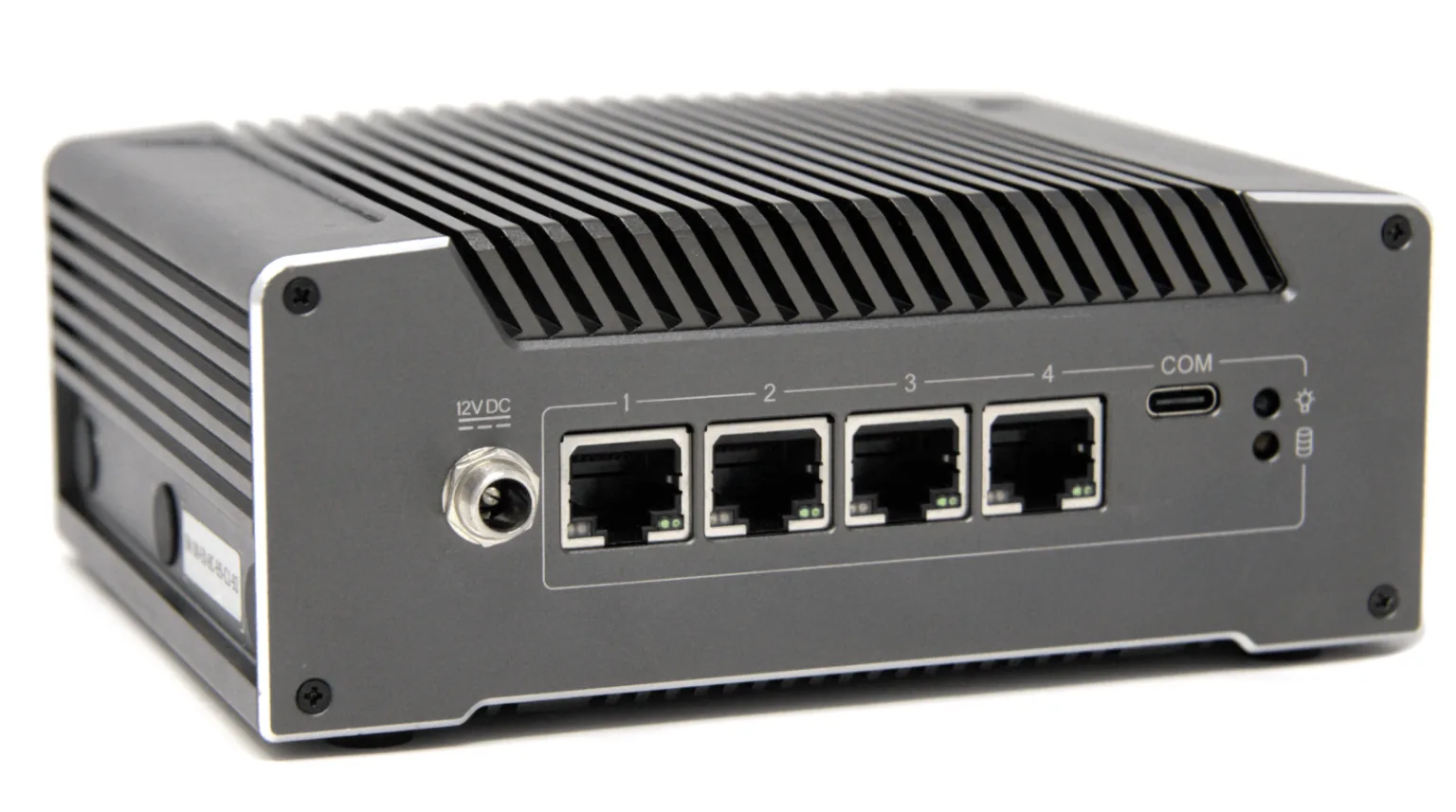
Protectli Vault review
Who is this for? Home users and small businesses who want to run OPNsense or pfSense on dedicated hardware. Requires technical knowledge — see the OPNsense VLAN guide for the matching configuration.
The Protectli Vault is a fanless mini PC with multiple Intel network ports, designed as a platform for open-source firewall software like OPNsense or pfSense. The recommendation for home users and small businesses wanting a fully configurable firewall on dedicated hardware.
EU buyers: Protectli opened a German warehouse (near Frankfurt) in 2026 that ships to the 19 Eurozone countries with no customs fees, local support, and free shipping over €99 — order from eu.protectli.com rather than the US store to avoid import duty and delays.
Why dedicated firewall hardware?
An ISP router or consumer device (TP-Link, ASUS) runs closed firmware. You cannot inspect what it does, you cannot set advanced rules, and updates depend on the manufacturer.
OPNsense and pfSense are fully open-source firewall operating systems. They run on standard x86 hardware — the Protectli Vault is designed as the most suitable home hardware for this purpose.
Models
The older FW line (FW2B, FW4B, FW4C, FW6E — DDR3L, mostly Gigabit ports) has been discontinued. The current line is the fanless V1000 series, all with 2.5GbE Intel I226-V ports:
| Model | CPU | Ports | Notes |
|---|---|---|---|
| V1210 | Intel N5105 | 2× 2.5GbE | smallest — WAN + LAN only |
| V1410 | Intel N5105 | 4× 2.5GbE | from ~$249 / ~€270 — the home default |
| 6-port V-series | Intel N-series | 6× 2.5GbE | more ports for heavier segmentation |
| VP2440e | Intel N150 | 2× 10GbE SFP+ + 2× 2.5GbE | for 10G networks |
Prices shift and Protectli refreshes models fairly often; the higher VP series goes well beyond this. Check the current lineup at protectli.com (or eu.protectli.com in Europe).
V1410 is the sensible default for home use — four 2.5GbE ports (WAN + LAN + two extra for VLAN segmentation), enough CPU for Suricata IDS/IPS on a gigabit connection, RAM and eMMC already on board.
Specifications (V1410)
| Property | Value |
|---|---|
| CPU | Intel N5105 (quad-core, 2.0 GHz base / 2.9 GHz turbo) |
| RAM | 8 GB LPDDR4 (soldered) |
| Storage | 32 GB eMMC on board + M.2 NVMe slot |
| Ports | 4× Intel I226-V 2.5GbE |
| USB | 2× USB 3.2, 1× USB 2.0 |
| Display | HDMI + DisplayPort |
| Cooling | Fanless — completely silent |
| Power consumption | ~6–12W |
| Price | from ~$249 / ~€270; more with a larger NVMe SSD |
Intel NIC — why it matters
The Protectli Vault uses Intel network chips (I226-V 2.5GbE on the current V-series). OPNsense and pfSense are optimised for Intel NICs — stable drivers, good support for VLANs and hardware offloading.
Cheaper mini PCs with Realtek NICs regularly have driver issues under FreeBSD (the basis of pfSense) and can cause speed problems with VPN encryption.
What you can do with it
Firewall and NAT: Standard function — determine which traffic is and isn’t allowed.
VLAN segmentation: Create separate network segments for IoT devices, guests and your main network. Each segment has its own rules — a smart TV cannot reach your NAS.
IDS/IPS with Suricata: Intrusion detection and prevention at packet content level. Detects known attack patterns in live traffic.
VPN server (WireGuard/OpenVPN): OPNsense has built-in WireGuard and OpenVPN server. Securely access your home network from outside.
HAProxy / reverse proxy: Set up a reverse proxy for self-hosted services (Nextcloud, Home Assistant) with Let’s Encrypt TLS.
DNS filtering: OPNsense has a built-in DNS resolver. Combine with Unbound + blocklists as an alternative to AdGuard Home.
Comparison with alternatives
| Protectli V1410 | Firewalla Gold SE | GL.iNet Flint 3 | Raspberry Pi 5 | |
|---|---|---|---|---|
| Firewall OS | OPNsense/pfSense | Firewalla OS | OpenWrt | DIY |
| Technical level | High | Low | Medium | High |
| Intel NICs | Yes | Yes | No | No |
| IDS/IPS | Suricata | Built-in (limited) | No | DIY |
| Open-source | Fully | Partially | Fully | Fully |
| Built-in Wi-Fi | No | No | Yes | Via adapter |
| Price | paid + optional SSD | paid | paid | low-cost DIY + extras |
No WiFi: The Protectli Vault has no wireless radios. You need a separate access point (TP-Link EAP, Ubiquiti, or your existing router in bridge mode).
OPNsense vs pfSense
Both are excellent. For new installations:
- OPNsense: More active development, more frequent updates, more modern interface, better documented for beginners. Recommended.
- pfSense: Large community, more online tutorials. The free CE edition is still maintained (CE 2.9.0 shipped in 2026), but Netgate’s main focus is the commercial pfSense Plus.
Caveats
No WiFi: Requires an external access point. Budget for that separately.
Learning curve: OPNsense/pfSense are powerful but require understanding of network concepts (VLAN, firewall rules, NAT). Not for someone who wants to install and forget.
Storage: the V-series has RAM and a small eMMC on board (enough for OPNsense), but if you want a larger NVMe SSD for logging or packages, budget for that separately.
Pros and cons
Pros
- Intel NICs (I226-V 2.5GbE on the V-series) — stable drivers and reliable hardware offloading under OPNsense/pfSense, no Realtek issues
- Fanless, completely silent — suitable for 24/7 use at ~6–12W power consumption
- Full OPNsense feature set: VLAN segmentation, Suricata IDS/IPS, WireGuard/OpenVPN server, HAProxy, DNS filtering
- Open-source firewall OS — fully auditable, no closed firmware dependency
- Four 2.5GbE ports on the V1410 enable WAN + LAN + two extra for VLAN segmentation
- EU warehouse (Germany) means no customs charges or import delays for European buyers
Cons
- No Wi-Fi — requires a separate access point
- OPNsense requires understanding of network concepts (VLAN, firewall rules, NAT) — not for install-and-forget users
- On the V-series RAM and eMMC are on board, but a larger NVMe SSD is a separate purchase
- High learning curve compared to Firewalla or GL.iNet
Conclusion
The Protectli Vault is the default choice for advanced home users and small businesses who want full control over their network. OPNsense runs stably on it, Intel NICs cause no issues, and the fanless design makes it suitable for 24/7 use.
Those with the technical knowledge to configure OPNsense get more out of this than a Firewalla or GL.iNet. Those who don’t are better starting with a Firewalla.
Getting started
OPNsense installation is involved — the companion guide walks you through it step by step.
1. Prepare the hardware
The V-series ships with RAM and a small eMMC already on board; add an M.2 NVMe SSD if you want more room for logs and packages. Connect a monitor and keyboard via HDMI/DisplayPort and USB for the initial installation.
2. Install OPNsense
Download the OPNsense ISO from opnsense.org. Write it to USB with Balena Etcher. Boot the Vault from USB and follow the installer (select option 99 in the boot menu to install to disk).
3. Configure
Basic configuration (WAN/LAN setup, firewall rules) is done via the web interface at 192.168.1.1. See the OPNsense VLAN guide for VLANs, Suricata IDS/IPS, and further configuration.
Next step
Chosen the Protectli Vault?
- Setting up OPNsense VLAN segmentation — step-by-step VLANs, Suricata, and work/private/IoT separation
Similar options
- Firewalla Gold review — plug-and-play alternative with no learning curve
- GL.iNet Flint 3 review — the middle ground: technical but more accessible than OPNsense
Want to go further?
- Network segmentation with VLANs — concepts behind VLAN segmentation at home