Faraday bags review: do they actually work for radio isolation?
A Faraday bag is meant to strongly reduce or block wireless signals. In practice, effectiveness varies a lot by material, closure, and size.
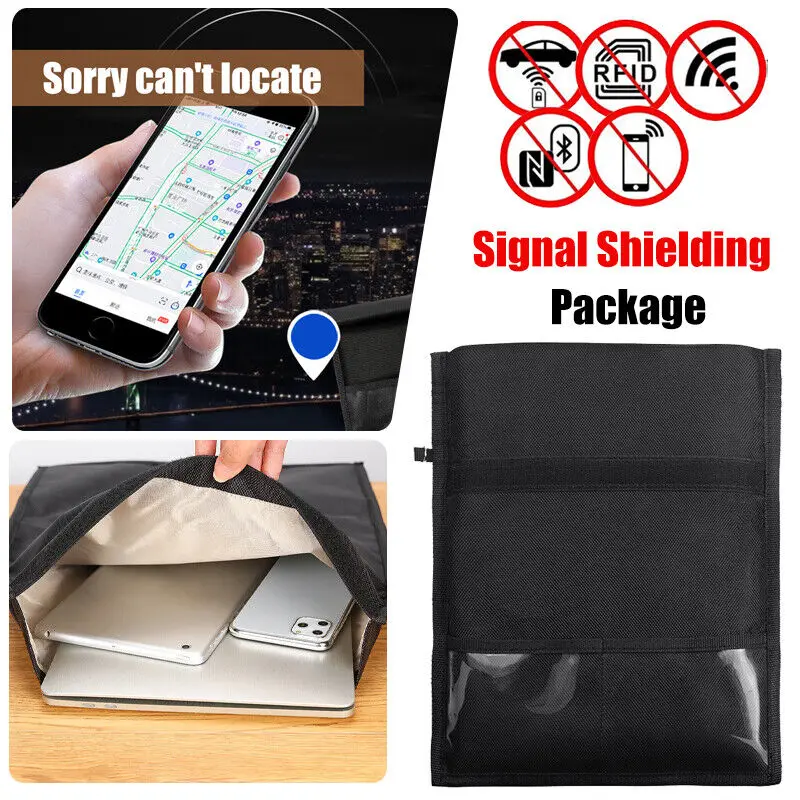
Faraday bags review: do they actually work?
A Faraday bag is meant to strongly reduce or block wireless signals. In practice, effectiveness varies a lot by material, closure, and size.
Who is this for? Anyone considering a Faraday bag who wants to know whether it actually works in practice. See the Faraday bag guide for an explanation of when a Faraday bag is useful and when it isn’t.
What is a Faraday bag?
A Faraday cage is a metallic enclosure that blocks electromagnetic signals. A Faraday bag is a portable version — a bag with a metallic lining that achieves the same effect.
Applications:
- Blocking a phone from location tracking
- Blocking car keys (preventing relay attacks)
- Transporting devices without them connecting to any networks
How to read Faraday claims
Manufacturers like to cite attenuation in dB, but without an independent test method that number says little. For normal buyers, a practical check is often more useful: does your phone actually stay offline, can the car key still be used, or does contactless payment still work?
What matters in practice
For car keys and basic phone isolation, a decent pouch can be enough. For forensic work or serious counter-surveillance, you need to be much more critical and ideally rely on independently validated products plus your own verification procedure.
When do you need a Faraday bag?
For most people: probably never. A Faraday bag is a tool for specific situations:
- Protecting keyless entry car keys against relay attacks (thieves capture and copy the signal)
- Taking a phone to a location without tracking
- Isolating devices during forensic investigation or security testing
If you suspect your phone is compromised: airplane mode is the easier option for most situations. A Faraday bag adds value when you do not trust airplane mode.
Which Faraday bag for which use case?
The required shielding depends on what you are trying to do.
Stopping relay attacks on car keys: The goal here is relatively simple: the key must no longer be usable from outside. A practical home test matters more than a marketing number.
Keeping your phone offline for everyday use: If your phone still shows notifications, GPS, or mobile signal, the pouch is not good enough for your purpose. Test that yourself instead of trusting the product copy.
Serious counter-surveillance or forensic use: Then a generic webshop pouch is usually not enough. You want independent validation, a clear procedure, and no assumptions.
Caveats
The category is easy to oversell: Many Faraday bags are marketed as if they provide lab-grade isolation out of the box. In reality, closure quality, wear, device size, and testing conditions matter more than the product copy.
A pass/fail test is not the whole story: A pouch that blocks one signal in one home test can still be weaker than expected in a different environment or against different frequencies. If the stakes are high, “my phone stopped ringing once” is not enough validation.
Wrong tool for many privacy problems: If your real issue is malware, poor phone hygiene, or a weak threat model, a Faraday bag can become a distraction. It helps with radio isolation, not with everything people casually label as surveillance.
Pros and cons
Pros
- Can be useful for car keys, simple isolation, and transport
- No software or configuration needed
- Compact and portable
- Covers multiple radio signals at once
Cons
- Marketing claims are often poorly verifiable
- Cheap pouches vary a lot in quality
- For real isolation, verification matters more than brand name
- If you think a phone is compromised, a pouch is only one extra layer
Conclusion
The right choice depends on your goal. For car keys or simple phone isolation, a decent pouch can be enough. For heavier use cases, only trust products you verified yourself or that are demonstrably independently tested.
Next step
Got a Faraday bag?
- Test it yourself: put your phone inside, call the number, and check whether it rings at all
- Test car keys: keys in the pouch, try to unlock the car — it should be rejected
Similar options
- Bug and camera detector T15 review — detecting active transmitters in unfamiliar spaces
Want to go further?
- Profile: journalist or activist — when Faraday protection is relevant
- Profile: high risk and full OpSec — physical security at high threat levels