What happens when your primary device disappears
Familiar situation: your phone is at a friend's place. Or the battery is dead and the charger is somewhere else. Or the screen is cracked and you are waiting for a repair.
19 May 2026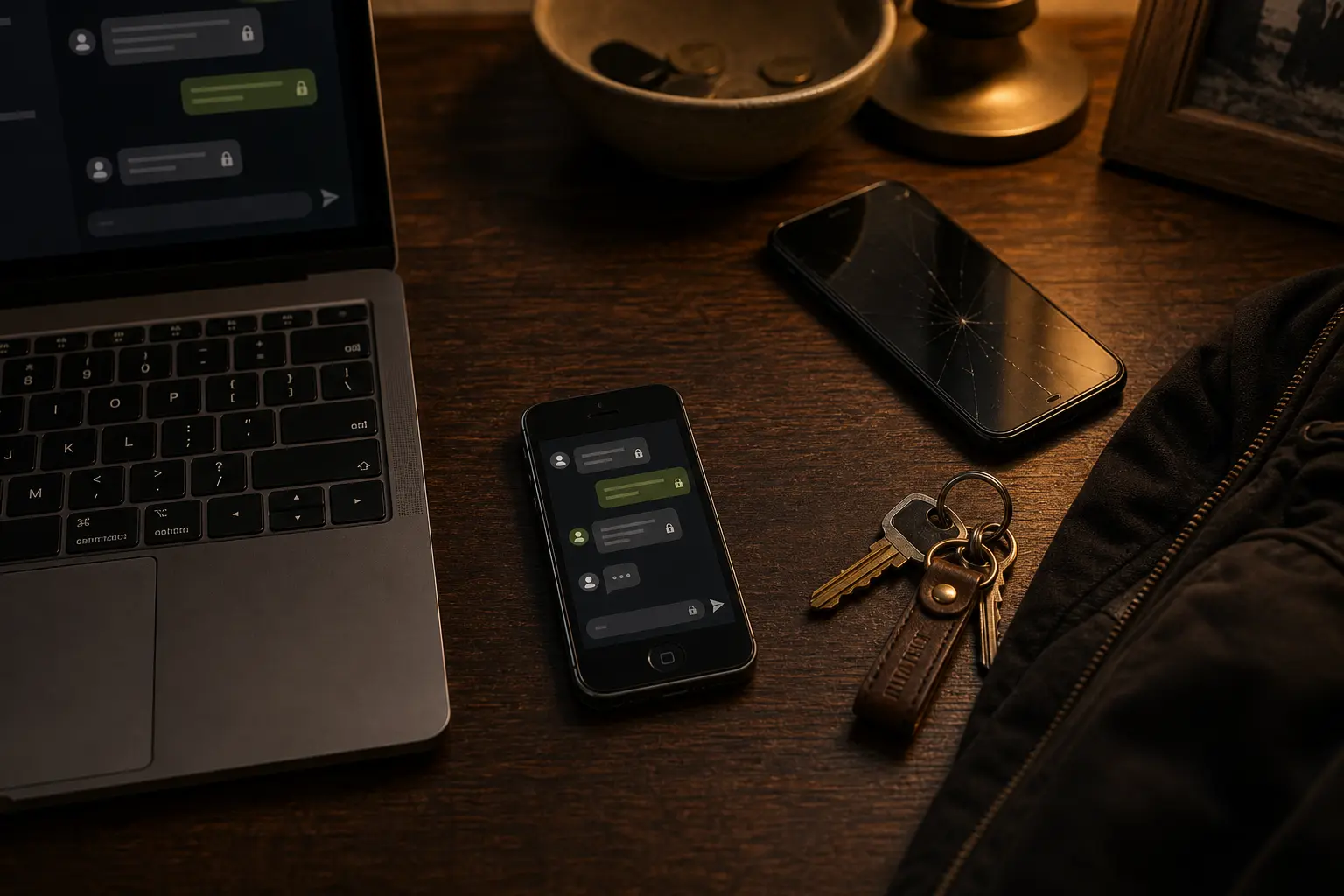
What happens when your primary device disappears
Familiar situation: your phone is at a friend’s place. Or the battery is dead and the charger is somewhere else. Or the screen is cracked and you are waiting for a repair.
Normally that means being unreachable for a few hours. Most modern messaging systems are tightly tied to a single smartphone, app ecosystem, and phone number. Lose access to that chain temporarily, and communication becomes awkward surprisingly quickly.
But imagine this instead: you pull an old phone out of a drawer — a device you haven’t used in years — install an XMPP client, log into your account, and just carry on. Messages, voice calls, video calls, everything. Encrypted. Within a few minutes.
That is not science fiction. That is how it works.
Modern messaging is built around the smartphone
Modern messaging apps solve many problems extremely well. They are easy to install, reliable for media sharing, battery efficient, and encrypted by default in many cases.
But they also almost always assume:
- one person
- one primary smartphone
- one app ecosystem
- one persistent identity chain
That convenience comes with tradeoffs. Communication becomes increasingly tied to phone numbers, vendor-controlled recovery flows, device approval chains, and tightly integrated ecosystems.
Most users never notice this because the system works smoothly under normal conditions.
Until a phone is left behind. A battery dies. A device breaks. A SIM card stops working while travelling.
At that point, the communication system itself becomes part of the problem.
Why XMPP still feels different
XMPP is not new. It is not trendy. It does not have the polished ecosystem of modern commercial messaging apps.
But it still reflects an older internet philosophy: communication as a portable service rather than a device-bound app.
An XMPP account works on almost any device you already own — an old Android phone from a drawer, a Linux desktop, a laptop, a temporary system. Multiple clients simultaneously, on multiple devices, with no approval flow or linking process required.
And it is not just text. Modern XMPP clients support voice calls, video calls, and encrypted file transfers. The encryption — OMEMO, built on the same protocol as Signal — is solid and widely supported.
The account is not locked to one piece of hardware. That makes all the difference.
What newer apps do differently
Newer platforms optimise for very different things.
Signal is the most straightforward daily recommendation for most people. Polished, reliable, strongly encrypted. Multi-device support has improved. But Signal still fundamentally revolves around a phone-number identity and a primary smartphone — an old phone from a drawer does not simply become a full second device.
Matrix is probably the closest modern equivalent to the original XMPP philosophy: federation, self-hosting, open protocols, cross-platform clients. But Matrix behaves more like a synchronised platform — closer to Slack or Discord. That produces a smoother multi-device experience, but also heavier infrastructure and larger storage requirements. Too heavy as a lightweight backup layer.
SimpleX minimises identity exposure: no phone number, no username, connections via invitation links. An interesting concept, but the ecosystem is still small and onboarding is less familiar.
Session pushes further toward anonymity, with onion-routing-inspired infrastructure. Smaller ecosystem, slower development pace.
The lesson underneath
Messaging apps are rarely discussed as backup systems. The conversation almost always centres on encryption, surveillance, or features.
But the question that changes the picture is simpler:
What do you do when your primary device is temporarily unavailable?
For that question, XMPP is still a surprisingly good answer. Not because it is better than Signal on the criteria Signal is designed for. But because it is lightweight, portable, works on almost any device you already own — including that old phone in a drawer — and requires no phone number or approval flow.
The added irony: it is exactly the kind of app people quickly dismiss as “something for tech people” or “something for people with something to hide.” While the actual use case — a forgotten phone, a spare device, just carrying on — is so ordinary it barely needs explaining.
Stopping point
You do not need to replace anything. Signal remains the right daily choice for most people.
But if you have ever wondered what happens when your phone is temporarily unavailable: setting up an XMPP account takes about five minutes, works on any device you already own — including that old phone in a drawer — and asks nothing of your daily communication habits.
Next step
Set up XMPP
Other alternatives without a phone number
- SimpleX Chat: messaging without an account or identity
- Session: encrypted messaging without a phone number