Pixel 9 with GrapheneOS review
Who is this for? Anyone who wants a modern Pixel for GrapheneOS without the Pro price. The Pixel 9a is the newer entry-level option at this price point. See the Which Pixel for GrapheneOS? guide for a full overview.
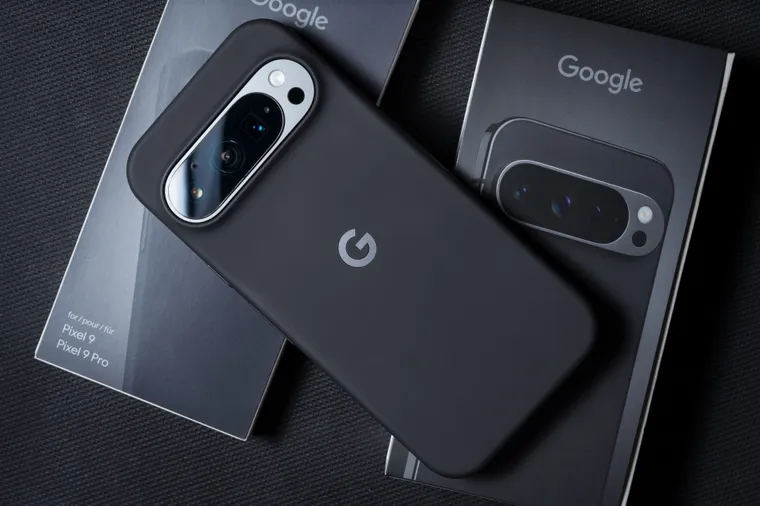
Pixel 9 with GrapheneOS review
Who is this for? Anyone who wants a modern Pixel for GrapheneOS without the Pro price. The Pixel 9a is the newer entry-level option at this price point. See the Which Pixel for GrapheneOS? guide for a full overview.
The Pixel 9 series combines Tensor G4, Titan M2, and updates until ~2031. It has since been succeeded by the Pixel 10 series (2025) and the Pixel 11 (August 2026) — but GrapheneOS support currently tops out at the Pixel 10, so for GrapheneOS the Pixel 9 is still solid, supported hardware rather than an outdated choice. The question: does it justify the higher price over the Pixel 9a?
What’s new in the Pixel 9 series
Tensor G4: Google’s fourth in-house ARM chip. Better AI performance and slightly higher efficiency than the G3 in the Pixel 8. For daily phone use the difference is small; for heavy on-device AI tasks noticeable.
Longest support period: The Pixel 9 series gets 7 years of security updates — updates until ~2031. That is two years longer than the Pixel 6/7 generation and comparable to the Pixel 8 series.
Titanium frame (9 Pro / XL / Fold): The Pro models have a titanium housing instead of aluminium. Stiffer, lighter per volume, but no security relevance.
The models compared
| Model | Price | Availability | Screen | RAM | Notable |
|---|---|---|---|---|---|
| Pixel 9a | ~€350–400 / $499 | Yes widely available | 6.3” OLED | 8 GB | Best value, no UWB |
| Pixel 9 | ~€400–500 / $799 | Yes widely available | 6.3” OLED | 12 GB | IP68, no UWB |
| Pixel 9 Pro | ~€600–700 / $999 | Yes multiple retailers | 6.3” OLED | 16 GB | UWB, best camera small size |
| Pixel 9 Pro XL | ~€600–750 / $1,099 | Yes multiple retailers | 6.8” OLED | 16 GB | UWB, large screen, longer battery |
| Pixel 9 Pro Fold | ~€1,700+ / $1,799 at launch | ⚠️ limited availability | 6.3” + 8” OLED | 16 GB | UWB, foldable |
Prices: indicative only — with the Pixel 10 and 11 generations now out, the Pixel 9 line sells well below its launch figures and increasingly through retailers and refurbished channels rather than the Google Store. Check current pricing before buying. The Pixel 9 Pro Fold in particular has been discounted heavily since its $1,799 US launch price. All models: Tensor G4, Titan M2, wireless charging. UWB is only available on Pro models (9 Pro, 9 Pro XL, 9 Pro Fold) — not on the base model or 9a. The Pixel 9a matches the Pixel 9 at IP68.
Security-wise identical: The Titan M2 chip and GrapheneOS support are the same on all five models. The choice is screen size, camera, and budget.
Specifications (Pixel 9)
| Property | Value |
|---|---|
| Chip | Google Tensor G4 |
| Security chip | Titan M2 |
| RAM | 12 GB LPDDR5 |
| Storage | 128 GB / 256 GB UFS 3.1 |
| Screen | 6.3” OLED, 120 Hz |
| Battery | 4,700 mAh |
| Wireless charging | Yes — 15W Qi |
| UWB | No (Pro models only) |
| IP rating | IP68 |
| Updates | ~2031 |
| GrapheneOS | Fully supported |
| GrapheneOS install | Free — self-install via web installer (15–30 min) |
| Price | below the $799 launch price — check current retail/refurbished pricing |
GrapheneOS on the Pixel 9
The installation experience is identical to the Pixel 8. The GrapheneOS web installer supports all Pixel 9 models. Wi-Fi 7 support works fully on GrapheneOS — no limitation compared to standard Android. Check the current support status at grapheneos.org.
The Tensor G4 has an improved Titan M2 implementation with more isolated secure enclave memory compared to the G3. In practice the difference in security level is minimal — the Titan M2 in the Pixel 8 is already excellent.
Pixel 9 vs Pixel 8 — is the upgrade worth the price?
| Pixel 9 | Pixel 8 | |
|---|---|---|
| Chip | Tensor G4 | Tensor G3 |
| Updates until | ~2031 | ~2030 |
| Wireless charging | Yes | Yes |
| UWB | No | No |
| Wi-Fi generation | Wi-Fi 7 | Wi-Fi 6E |
| Price | ~€400–500 / $799 | ~€300–400 / $699 |
If you already have a Pixel 8: The upgrade is not necessary. Security-wise identical, updates until 2030 still plenty.
If buying new: The Pixel 9 has Wi-Fi 7 and updates until 2031. If budget allows it’s the better long-term investment.
If budget is a consideration: The Pixel 9a provides the same security level with the same Tensor G4 chip for significantly less. Check current pricing at your retailer.
Caveats
Price: Check current retail pricing. The Pixel 9a offers the same security for less — the difference is camera and display quality.
Tensor G4 thermal management: Like the G3, the Tensor G4 runs warm under intensive use (gaming, long video recording). No different from the previous generation.
Pixel 9 Pro Fold: launched at $1,799 / roughly €1,700, now frequently discounted to $1,000–1,300. Niche — not recommended unless the foldable form factor serves a specific purpose.
Pros and cons
Pros
- Tensor G4 with improved Titan M2 secure enclave — verified boot and full-disk encryption at the highest hardware level
- Wi-Fi 7 support works fully on GrapheneOS with no limitations
- IP68 water resistance — tested to stricter standard than the Pixel 9a
- Updates until ~2031 — seven years of security patches
Cons
- The Pixel 9a provides identical security hardware at a lower price — check current price gap
- Tensor G4 runs warm under intensive use — same thermal management limitations as the G3
- Banking apps and NFC payments (Google Pay) require sandboxed Google Play setup
Conclusion
The Pixel 9 is excellent hardware for GrapheneOS. Tensor G4, Titan M2, Wi-Fi 7, updates until 2031, and wireless charging. If price is not an issue, this is a solid starting point for a new GrapheneOS installation.
Also look at the Pixel 9a if budget matters — security-wise identical, same chip, lower price.
Next step
Chosen the Pixel 9?
- Installing GrapheneOS on Pixel — step-by-step installation guide, takes 15–30 minutes
- GrapheneOS first setup — what to do right after installation
Similar options
- Pixel 9a review — recommended value model, same Tensor G4 at a lower price
- Pixel 10 review — newer generation with Tensor G5 and updates until ~2032
- Pixel 11 review — launched August 2026; GrapheneOS support not yet confirmed
Want to go further?
- Which Pixel for GrapheneOS? — full model overview with comparison table