Bug and camera detector T15 review — detecting hidden cameras and listening devices
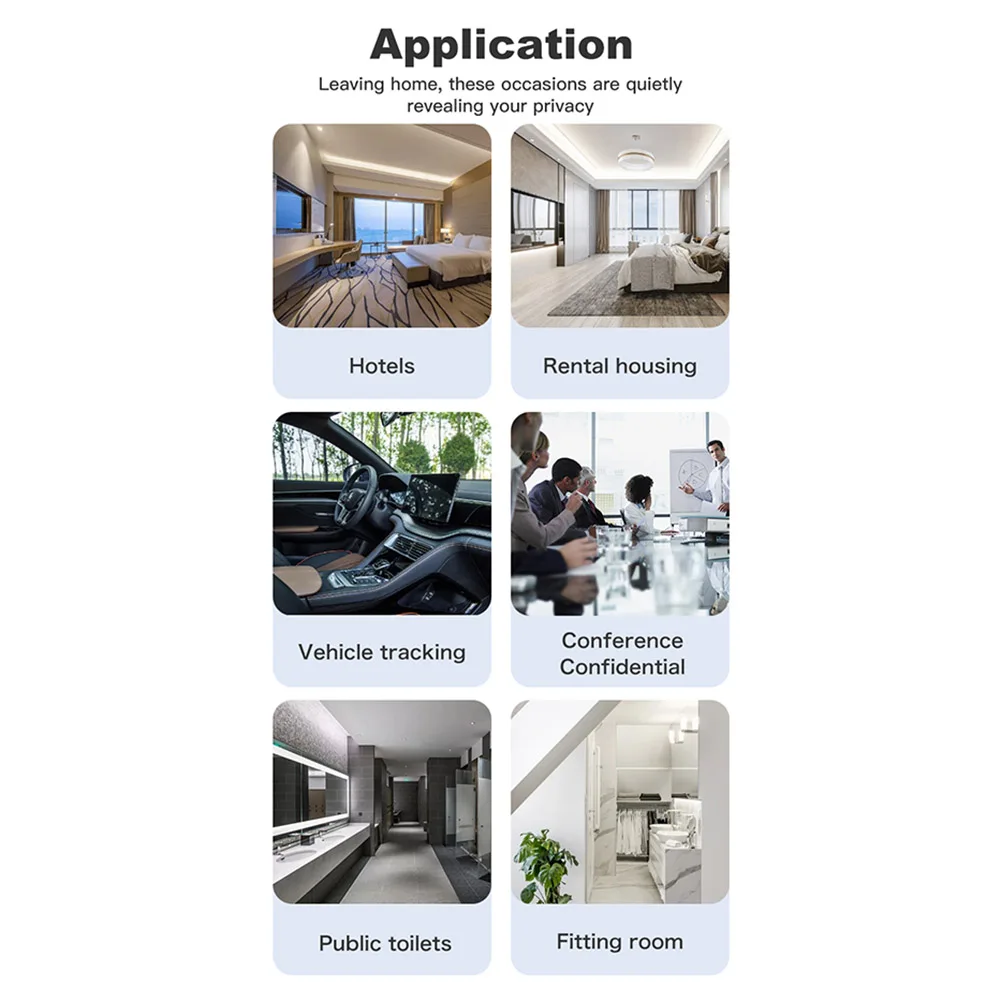
The T15 detector combines RF detection for listening devices with a lens detector for hidden cameras. Useful for Airbnb, hotel rooms, and private conversations.
Bug and camera detector T15 review
Hidden cameras and listening devices are real threats — not just for journalists or executives, but for ordinary people in Airbnb accommodation, hotel rooms, or during sensitive conversations. The T15 is a compact device that combines two detection methods.
Two detection methods
RF detection (Radio Frequency)
Many hidden devices transmit wirelessly — via WiFi, Bluetooth, GSM, or 433 MHz. The T15 has an RF detector that picks up electromagnetic signals across a broad frequency range. If a transmitting device is active nearby, the detector signals it.
Limitation: Not all hidden cameras transmit actively. Cameras that record to a local SD card without broadcasting are invisible to RF detection.
Lens detection (infrared reflection)
The T15 has a row of red LEDs that emit infrared light. By looking through the viewfinder, camera lenses appear as bright red dots — even if they are switched off or not transmitting.
How it works: Camera glass reflects infrared strongly back to the source. This works regardless of whether the camera is active. Effective for detecting hidden lenses in alarm clocks, smoke detectors, USB chargers, and other objects.
Limitation: Requires visual inspection of each object. Works less well in bright environments. Regular glass can also reflect — requires some practice.
T15 specifications
| Property | Value |
|---|---|
| RF detection range | 1 MHz – 8 GHz (broad, covers WiFi/BT/GSM) |
| Lens detection | Infrared LED array, viewfinder |
| Sensitivity | Adjustable (5 levels) |
| RF range | Up to ~10 metres for strong transmitters |
| Lens range | Effective up to ~3 metres |
| Signalling | LED bar + sound (switchable) |
| Power | Rechargeable battery (USB-C) |
| Dimensions | Compact, fits in pocket |
| Price | €30–60 |
What the T15 detects
Detectable:
- Active WiFi cameras (Ring, Nest, IP cameras)
- GSM bugs that listen via mobile network
- Bluetooth transmitters
- 433 MHz wireless microphones
- Hidden camera lenses (inactive or active)
Not detectable:
- SD-card cameras that don’t transmit
- Hidden microphones that record without transmitting
- Devices that are temporarily inactive
Practical use
Airbnb and hotel rooms:
- Scan the room with RF detection — look for unusual peaks in bedroom, bathroom
- Dim the lights and scan each object with the lens detector through the viewfinder
- Pay extra attention to alarm clocks, smoke detectors, USB chargers, TV covers, picture frames
Meeting room check:
- RF scan for active transmitters before the meeting
- Lens check of decorative objects, smoke detectors, potted plants
Tip: Put your phone and laptop outside the room during RF detection — they transmit strong WiFi/Bluetooth signals themselves that can cause false alarms.
Limitations
False positives: WiFi routers, smart TVs, smart thermostats, and other legitimate devices emit RF signals. In a modern room with lots of IoT devices, the RF detector will be continuously active. Requires interpretation.
No guarantee: A professional bug with timers or that only records when sound is detected is difficult to detect. The T15 is a consumer device, not a professional countermeasure.
Skill required: Effective use requires knowing what is “normal” in a space versus what is suspicious. A beginner will have more difficulty.
Comparison with alternatives
| T15 | JMDHKK K88 | Phone app | Professional scan | |
|---|---|---|---|---|
| RF detection | ✅ | ✅ | Limited | ✅✅ |
| Lens detection | ✅ | ✅ | ❌ | ✅✅ |
| Price | €30–60 | €20–40 | Free | €500+ |
| Sensitivity | Consumer | Consumer | Low | Professional |
| Ease of use | Good | Good | Easy | Requires training |
For the majority of users (Airbnb checks, occasional use), the T15 is a good balance between price and functionality.
Conclusion
The T15 is a useful device for anyone who regularly stays in unfamiliar accommodation or holds sensitive conversations in unknown spaces. The combination of RF detection and lens scanning covers the most common hidden camera types.
It is not a guarantee against every type of listening device, and false positives from legitimate devices require some interpretation. But as a precaution for Airbnb stays and business travel, it is worth the investment.
See also:
- Privacy screen review — visual shielding
- USB data blocker review — protection while charging