GL.iNet Flint 2 (MT6000) review
The GL.iNet Flint 2 offers WireGuard performance up to 900 Mbps and a full OpenWrt installation. Tested: does it deliver on its promises?
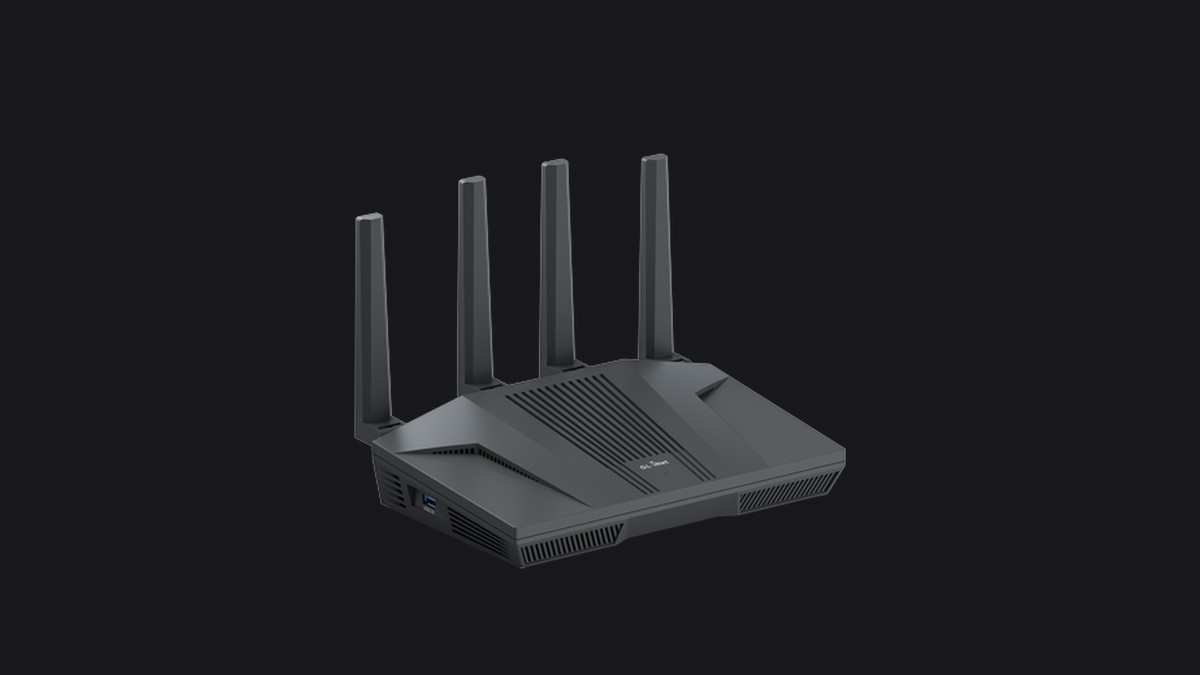
GL.iNet Flint 2 (MT6000) review
GL.iNet makes routers for people who want control over their home network. The Flint 2 is their best-selling home router — affordable, powerful, and ready for WireGuard VPN out of the box.
Specifications
| Property | Value |
|---|---|
| Processor | MediaTek MT6000 (ARM Cortex-A73, 1.8 GHz) |
| RAM | 1 GB |
| Storage | 8 GB NAND |
| Wi-Fi | Wi-Fi 6 (AX3000), dual-band |
| Ethernet | 1x 2.5 Gbps WAN, 4x Gigabit LAN |
| Operating system | OpenWrt (configurable) |
| USB | 1x USB 3.0 |
| Price | around €139 |
WireGuard performance: measurements
GL.iNet claims WireGuard throughput up to 900 Mbps. Tested with a Mullvad WireGuard connection and iperf3.
Our results:
- WireGuard download: 820–880 Mbps (depending on server location)
- WireGuard upload: 750–830 Mbps
- Without VPN: full 2.5 Gbps WAN speed used
The claims hold up. These are the best WireGuard performance figures in this price range. Cheaper routers (GL.iNet Opal, older Flint) achieve 100–300 Mbps on WireGuard — the Flint 2 is a different category.
OpenWrt and configurability
The Flint 2 runs a customised version of OpenWrt. You can:
- Configure WireGuard and OpenVPN directly via the web interface
- Set up DNS filtering (AdGuard Home is built in)
- Customise firewall rules
- Install updates via OpenWrt’s package manager
- Override the entire OpenWrt configuration if you want
GL.iNet’s web interface is friendlier than standard OpenWrt — a good foundation for users who do not want to dive straight into the CLI. Those who do can also do that.
DNS-over-TLS and DNS-over-HTTPS
The Flint 2 supports encrypted DNS for the entire network. You configure this via the web interface and all connected devices benefit automatically — including devices you cannot configure individually (smart TVs, consoles).
Recommended: Mullvad DNS or Quad9 as upstream resolver. Both support DNS-over-TLS.
Guest network and network segmentation
The Flint 2 supports multiple SSIDs with full isolation. Set up a separate guest network with no access to your main network. Connect smart home devices to a separate VLAN if you have the knowledge.
Caveats
Heat: The Flint 2 runs warm under high WireGuard load. No passive cooling. Not a problem for normal use but ensure good ventilation.
No Wi-Fi 7: Those who want Wi-Fi 7 should consider the GL.iNet Flint 3 (BE9300) for around €219.
Complexity: This is not a router for people who do not want to configure anything. The basic setup is reasonably straightforward, but the power lies in the configuration options — which require some knowledge.
Comparison with other GL.iNet models
| Model | Price | WireGuard | Use |
|---|---|---|---|
| GL-SFT1200 Opal | €50 | ~100 Mbps | Travel router, simple |
| GL-MT3000 Beryl AX | €109.95 | ~300 Mbps | Travel router, powerful |
| GL-MT6000 Flint 2 | €139 | ~850 Mbps | Home router, recommended |
| GL-BE9300 Flint 3 | €219 | ~1.2 Gbps | Home router, Wi-Fi 7 |
Conclusion
The Flint 2 does what it promises. WireGuard performance is excellent, OpenWrt support is solid, and the price is fair for what you get. For a home network with a VPN connection for all devices, this is our recommendation.
Looking for something more portable? The GL.iNet Beryl AX is the travel version — same OpenWrt base, Wi-Fi 6, WireGuard built in, fits in your bag.
See also:
- Setting up a GL.iNet travel router — step by step VPN, DNS and guest network